George L. Duarte

Mortgage Loans Fremont California Horizon Financial Associates

  • Home
  • About
    • About
    • Awards
    • Privacy Policy
    • California Privacy Notice
    • Accessibility Statement
  • Reverse Mortgage Library
  • Resources
    • Real Estate Corner Radio Show
    • VA Loans
    • Home Appraisal
    • Home Inspection
    • Loan Checklist
    • Loan Process
    • Mortgage FAQ
    • Mortgage Glossary
    • Closing Costs
    • Loan Programs
    • Living Trusts
  • Reviews
    • Video Testimonials
    • Reviews
    • Write a Review
  • Apply Now
  • Contact

Fed Meeting Statement Positive For Ongoing Mortgage Sector Support

August 1, 2013 by George Duarte Leave a Comment

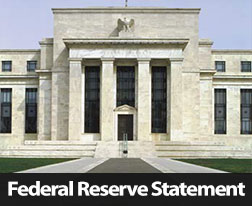
Fed Meeting Statement Positive For Ongoing Mortgage Sector Support

There was potentially good news for mortgage rates on Wednesday as the Fed’s Federal Open Market Committee (FOMC) announced that its quantitative easing (QE) program would remain unchanged for the present.

Economists expect the Fed to begin tapering the amount of QE toward the end of the year in accordance with Chairman Ben Bernanke’s previous statements that “tapering” would likely begin near year-end.

No specific date for reducing the QE assets purchases was given.

Chairman Bernanke has previously indicated that the Fed will closely review domestic and global economic developments as part of its decision-making process for changing the QE program. Wednesday’s FOMC statement reaffirmed this plan.

Fed Cites Economic Expansion and Improving Labor Conditions

The FOMC statement cited modest economic expansion, improving labor markets and continued high unemployment levels as a basis for continuing its current level of QE.

The Fed’s mandate requires it to support price stability and low unemployment; reversals in these or other economic areas could cause the Fed to continue its QE at present levels. At present, economists expect QE to end in mid-2014.

The FOMC statement also indicated that the target federal funds rate will remain between 0.00 and 0.25 percent at least until the national unemployment rate falls to 6.50 percent. Chairman Bernanke did not give a press conference after Wednesday’s statement was released.

Quantitative Easing: Monthly Purchase of MBS, Treasury Securities Intended to Control Mortgage Rates

The Fed currently purchases $40 billion in mortgage-backed securities (MBS) and $45 billion in Treasury securities monthly. These purchases are intended to control long-term interest rates including mortgage rates.

When the Fed begins tapering and eventually concludes these asset purchases, demand for MBS and Treasury securities are expected to fall and their prices will likely fall as well. When prices for bonds include MBS fall, mortgage rates traditionally rise.

With mortgage rates recently moving up, reducing the level of the Fed’s QE asset purchases is cause for concern. Higher mortgage rates make homes less affordable; the combination of rising home prices and mortgage rates presents challenges for first-time home buyers and others without sufficient funds for meeting higher down payments and monthly mortgage payments.

Now would be a very good time to ask your trusted mortgage professional for a personal review of your mortgage situation.  Give them a call and ask for your private assessment today.
Filed Under: Federal Reserve Tagged With: Federal Reserve,FOMC Statement,Federal Funds Rate,Unemployment Rate

FOMC Minutes Reveal Fed May Curb Economic Support Program Before Year End

July 11, 2013 by George Duarte Leave a Comment

FOMC Minutes Reveal Fed May Curb Economic Support Program Before Year EndFOMC Minutes Suggest QE Tapering by Year-End

The minutes for June’s meeting of the Federal Open Market Committee (FOMC) suggest that committee members are mostly in agreement that the current quantitative easing program (QE) should begin winding down by year end, but the committee minutes are very clear concerning the committee’s intention to monitor inflation and ongoing economic and financial developments before taking action to reduce the current rate of QE.

The Fed currently purchases $85 billion monthly in Treasury securities and mortgage-backed securities (MBS). Investors fear that if the Fed rolls back QE too soon or too fast, it could cause long term interest rates such as mortgage rates to rise faster.

The Fed minutes indicate that factors the Fed will continue monitoring before making changes to QE include:

  • Labor market conditions
  • Indicators of inflationary pressures
  • Readings on financial developments

FOMC members also agreed that the Fed would not sell MBS it has accumulated after the economic support program ceases. When the Fed ceases QE, demand for mortgage-backed securities is expected to fall. If the Fed were to sell off MBS holdings in addition to stopping QE, MBS prices could fall sharply. In general, when MBS prices fall, mortgage rates rise.

The FOMC minutes indicate that the Fed intends to maintain the Federal Funds rate at 0.000 to 0.250 percent “for a considerable time after the monthly asset purchases cease.”  To be clear, the minutes do not reveal any specific dates for starting to wind down the program.

Concerns over financial conditions in Europe highlight the Fed’s intention to monitor global economic developments were discussed. Potential “spillover” of negative sentiments in response to Europe’s economic woes to U.S. financial markets were seen as a potential threat to the U.S. economic recovery.

Committee members found that although the economy showed moderate improvement since its last meeting, the national unemployment rate remains high at 7.60 percent. Members also noted that the numbers of long-term unemployed and those working part time jobs but wanting full time jobs remain higher than average. These conditions traditionally keep consumers from buying homes.

Housing: Upside-Down Mortgages Decreasing

Due to rapid increases in home values, the committee noted that fewer homeowners were under water on their mortgage loans. This is good news as homeowners can rebuild household wealth as their home equity increases. Having home equity also provides homeowners with the flexibility to sell or refinance their homes.

While housing is driving the economic recovery, high unemployment will likely keep the Fed from changing its QE policy in the short term.

Now may be a very good time to take advantage of still historically low mortgage interest rates before they rise. If you have specific questions on purchasing or refinancing your home mortgage loan and how these changes may affect you, please contact your trusted mortgage professional today.

Filed Under: Federal Reserve Tagged With: Federal Reserve,Mortgage Rates,Quantitative Easing

« Previous Page
Next Page »

Sidebar

George L. Duarte

MBA, CMC, CMHS
Call 510.377.9059
Fremont, CA

California DRE Corp Lic no. 01032295
DRE Personal Brokers Lic. No. 00943635
NMLS Corporate Lic. No. 302358
Personal Lic. No. 302219

Horizon Financial Associates LogoView Lending CertificateNAMB Member Certificate

Get a Rate Quote
Mortgage Refinance Companies
NAMB
Proud Supporter Of Our Military
CMC Logo

Stay up to date with the latest news to your inbox!

No spam ever and you can unsubscribe anytime.


Horizon Financial Associates BBB Business Review

Connect with Me

Browse Articles by Category

Mortgage Pros2019 Best of Fremont2017 Best of Fremont2016 Best of Fremont

See More Awards →

Recent Articles

  • Millennials and the Pursuit of Homeownership
  • What’s Ahead For Mortgage Rates This Week – January 29th, 2024
  • Are You Ready for Home Ownership? Find Out by Answering These 4 Questions
  • Maximizing Your Mortgage: Unveiling Strategies for Faster Payoff and Interest Savings
Horizon Financial Associates is a BBB Accredited Mortgage Broker in Fremont, CA
Equal Housing Opp
crb logo REALTOR Logo


39488 Stevenson Pl Ste. 100
Fremont, CA 94539

Copyright © 2026 · Powered by MySMARTblog

Copyright © 2026 · Genesis Sample Theme on Genesis Framework · WordPress · Log in